
Thursday, September 28, 2017
The Difference Between Children and Adults
I've blogged this before, but it's very timely and also one of my favourites. Send it to someone who needs to hear it before Yom Kippur.

Lekach: Segula for Parnossa
Lekach is a sweet cake, traditionally made with honey. It is customary to ask for and receive "lekach" from someone [usually one's mentor or parent] on the day before Yom Kippur. One of the reasons given for this custom is that if it had been decreed, G‑d forbid, that during the year we should need to resort to a handout from others, the decree should be satisfied with this asking for food.
The Lubavitcher Rebbe used to hand out Lekach each year on erev Yom Kippur, or for those who did not receive it then, on Hoshannah Rabbah.
To read more about the reasons for this custom, click here.
Below is my recipe for a Rosh Hashanah chocolate honey cake, which is incredibly easy to make, you just place all the ingredients in a bowl, mix, and bake.
These quantities make a very large cake, or two smaller cakes. Note: this is a very large cake, you may want to halve the ingredients and make two loaf cakes instead.
One Bowl Chocolate Honey Cake
One Bowl Chocolate Honey Cake
3 eggs
One and a half cups sugar [I use raw caster sugar]
3/4 cup oil [I use lite olive oil]
1 teaspoon vanilla essence

One and a half cups water
3 tablespoons of cocoa powder
Place all ingredients into electric mixing bowl, beat until well combined. The mixture appears to be too liquid, but don't worry, that is how it's meant to be. Pour into large foil tray [or two smaller cake tins] and bake for approx 75 mins [large size] or 55 mins [smaller cakes] at 350°F - 180°C. Cooking times may vary depending on your oven.
*If you are using general purpose flour, you will need to add a teaspoon each of baking powder and bicarb soda. I prefer the convenience of self-raising flour.
Also see The Healing Powers of Apples and Honey
Also see The Healing Powers of Apples and Honey
Wednesday, September 27, 2017
Hurricanes, Quakes and now the Volcanoes
 |
| Catastrophe has struck the Pacific 'Ring of Fire' with flights carrying extra fuel in case of a major volcanic eruption, more than 75,000 people fleeing a Balinese region and the possibility of the evacuation of an entire island in Vanuatu |
Mass evacuations and states of emergency declared in Bali Indonesia and in Vanuatu [a small island near Australia]
Seems like all the popular vacation spots are being wiped out.
Tuesday, September 26, 2017
5778 is Upon Us
This is perhaps one of the most incredible things I've read on the internet. I'm not even sure if the website is regarded as ''kosher'' - but the information contained is actually mind-blowing.
Here is an extract:
Text by Jeffrey [Ezra] Meiliken
The year 5778 is finally upon us and the entire world has been witnessing the changes over the past year with the ominous signs recognizable to all.
For 5778 years the Earth has been circling the Sun at 66,600 miles per hour, or 107,000 kilometers per hour if you use that system.
Most people will recognize 666 as an apocalyptic sign but be that as it may, it is also a deep Kabbalistic concept and the numerical value of 2/3.
Rav Ashlag of blessed memory used that principle to determine the year of 5778 as the time of the geula (final redemption), and the Arizal hinted at its use to determine a specific date within the year 5778.
Equally significant is that the sum of the integers from 1 to 107 is also 5778 and that there are 107,000 letters in the Torah preceding the 10 Commandments, which were given in the 70th Chapter in the Torah, but that has already been written.
Since the beginning of consciousness, the biblical birth of Adam, the Earth has been hurtling through space at 66,600 miles per hour, and when it traveled exactly 1,666,666,666,666 miles, King David was born. 35 years later, at the midpoint in David’s 70-year lifespan, in the year 2889 HC, we reached exactly the midpoint to the year 5778. Let that sink in for a moment, and connect to the journey that began with Adam, paused with David, and brought us to this fateful point in time. The ancient kabbalists told us that ADAM (אדם) stands for Adam-David-Moshiach(א–ד–ם).
Continue reading: click here
for a critique on this article see Mashiach is Coming in 5778 - or is He?
Wednesday, September 20, 2017
Shana Tova 5778

Wishing everyone a Shana Tova and hopefully with no unwelcome guests like Maria.... I'll be back after the Chag but right now I have a lot of cooking to do. Chag Sameach !
Monday, September 18, 2017
Unetaneh Tokef
This video is entitled ''Unetaneh Tokef'' which means Let us Cede Power
''As the Days of Awe draw nearer, here's something to focus us during our prayers as we look back on the past year and pray for the next. ''
Sunday, September 17, 2017
Pomegranates, Apples and Honey

Adapted from articles by Rabbi Eli Mansour
Source: Chabad
There is a custom to refrain from bitter, sour or tart foods on Rosh Hashanah, to symbolize our hopes for a sweet, pleasant year. The Talmud declares that symbolic acts have significance. Therefore, one should not belittle the customs regarding the foods eaten on Rosh Hashanah as symbols of our prayers for the new year.
There is a common practice to eat a pomegranate on Rosh Hashanah, as its abundant seeds symbolize our hopes that we will come before G‑d with abundant merits. Interestingly, the Ben Ish Chai [Rav Yosef Chaim of Baghdad, 1833-1909] writes that on Rosh Hashanah one should eat specifically a sweet pomegranate, and he emphasizes this point several times. Of course, the pomegranates we have today generally have a bitter, pungent taste. It appears that in Baghdad, where the Ben Ish Chai lived, they had sweet pomegranates. In any event, in light of the custom to refrain from bitter foods on Rosh Hashanah, it would seem proper to dip the pomegranate in sugar to at least diminish its pungency.
It is also interesting to note that the custom of the Ben Ish Chai on Rosh Hashanah was to dip an apple in sugar, and not in honey. Perhaps this custom was based on Kabbalistic teaching. Regardless, everyone should follow his family's custom in this regard. [Same goes for bread -- my family keeps a bowl of sugar on the table until Shemini Atzeret, which the kids just love!]
It should be noted that the symbolic significance of the apple on Rosh Hashanah extends beyond the simple fact that it is a sweet food. In fact, the Arizal [Rav Yitzchak Luria of Safed, 1534-1572] remarked that there is profound Kabbalistic significance underlying the eating of apples on the nights of Rosh Hashanah. The Zohar refers to Paradise as the "Chakal Tapuchin Kadishin/orchard of holy apples."
The apples eaten on Rosh Hashanah thus symbolize not only sweetness, but also Paradise, which is certainly an auspicious sign with which to begin the New Year. Furthermore, the apple has a pleasing appearance, a pleasing fragrance and a pleasing taste. It is pleasing and enjoyable in every which way, symbolic of our hopes that the New Year will bring joy and success in all areas of life.
Furthermore, the Ben Ish Chai explained the significance of this custom on the basis of Kabbalistic teaching. During the period from Nissan until Tishrei, we are under the influence of the sefira ("emanation") of malchut, which is the lowest sefira and receives its strength from the higher sefirot. Once Tishrei sets in, we move into the sefira of tiferet, the higher sefira that gives to the lower sefirot. The sefira of tiferet is the sefira of Jacob, who represents Torah and who transmitted the power of Torah to subsequent generations. Tiferet is also associated with the attribute of "Emet" (truth), and on Rosh Hashanah we stand in judgment, which is based upon God's attribute of absolute truth. The apple, the Ben Ish Chai writes, is associated with the sefira of tiferet, and we therefore eat it on Rosh Hashanah, which marks the point of transition from the sefira of malchut to the sefira of tiferet.
Of course, the vast majority of us are not versed in Kabbala, and thus do not truly understand these concepts. Nevertheless, they demonstrate the depth and profundity of these customs that we observe on Rosh Hashanah. Besides the plays on words, such as "Yitamu Son'enu" ("Finish off those that hate us") for the "Tamar" (date), and "Yikartu Son'enu" ("Uproot those that hate us") for the "Karti" (leek), there are much deeper concepts underlying these customs, and we should therefore observe them in accordance with time-honored tradition.
If a person cannot eat one or several of the symbolic foods, either because he does not enjoy the taste or because of an allergy, then he should either look or point at the food while he recites the corresponding "Yehi Ratzon" prayer. He certainly is not required to partake of the food if he does not like it or is allergic to it, but he should nevertheless recite the prayer associated with the food, and this, too, will have a significant effect.
Thus, it is proper to refrain from bitter and sour foods on Rosh Hashanah. Pomegranates should preferably be dipped in some sugar before they are eaten on Rosh Hashanah, because they otherwise taste pungent. Some have the custom to dip the apple in sugar, instead of honey, and each person should follow his family's tradition. The customs regarding the special foods on Rosh Hashanah are based upon profound Kabbalistic concepts and thus should not be belittled or neglected.
Also see Healing Powers of Apples and Honey
Also see Healing Powers of Apples and Honey
Friday, September 15, 2017
24 Elul - Yahrzeit Chafetz Chaim

1838-1933 [5598-5693]
Rabbi Israel Meir HaCohen Kagan is commonly known as the "Chafetz Chaim," the name of his famous work on guarding one's tongue.
Born in Zhetel, Poland on February 6, 1838 [11 Shvat 5598], he was taught until age 10 by his parents and then moved to Vilna to further his Jewish studies. Refusing the pulpit rabbinate, the Chafetz Chaim settled in Radin Poland and subsisted on a small grocery store which his wife managed and he did the "bookkeeping"-watching every penny to make sure that no one was cheated. He spent his days learning Torah and disseminating his knowledge to the common people.
As his reputation grew, students from all over Europe flocked to him and by 1869 his house became known as the Radin Yeshiva. In addition to his Yeshiva, the Chafetz Chaim was very active in Jewish causes. He traveled extensively (even in his 90's) to encourage the observance of Mitzvos amongst Jews. One of the founders of Agudas Yisrael, the religious Jewish organization of Europe and later the world, the Chafetz Chaim was very involved in Jewish affairs and helped many yeshivos survive the financial problems of the interwar period.
Exemplifying the verses in Psalms 34:13-14, "Who is the man who desires life...? Guard your tongue from evil and your lips from speaking deceit," the Chafetz Chaim passed away in 1933 at the ripe age of 95.
The Chafetz Chaim's greatest legacy is the 21 sefarim [holy books] which he published. His first work, Sefer Chafetz Chaim [1873], is the first attempt to organize and clarify the laws regarding evil talk and gossip. He later wrote other works, including Shmirat HaLashon, which emphasized the importance of guarding one's tongue by quoting our Sages. The Mishnah Brurah [1894-1907], his commentary on the Daily Laws of a Jew [his first series in the Shulchan Aruch], is found in many Jewish homes and is accepted universally to decide Halacha.
Firmly believing that he was living right before the time of Moshiach and the rebuilding of the Holy Temple, the Chafetz Chaim wrote a work that stressed the learning of laws concerning sacrifices, the Holy Temple, and related topics. He also published seforim to strengthen certain aspects of Jewish life including kashrus, family purity, and Torah study.
More on the Chafetz Chaim click here
More on the Chafetz Chaim click here
Wednesday, September 13, 2017
Tuesday, September 12, 2017
Monday, September 11, 2017
Deciphering Irma
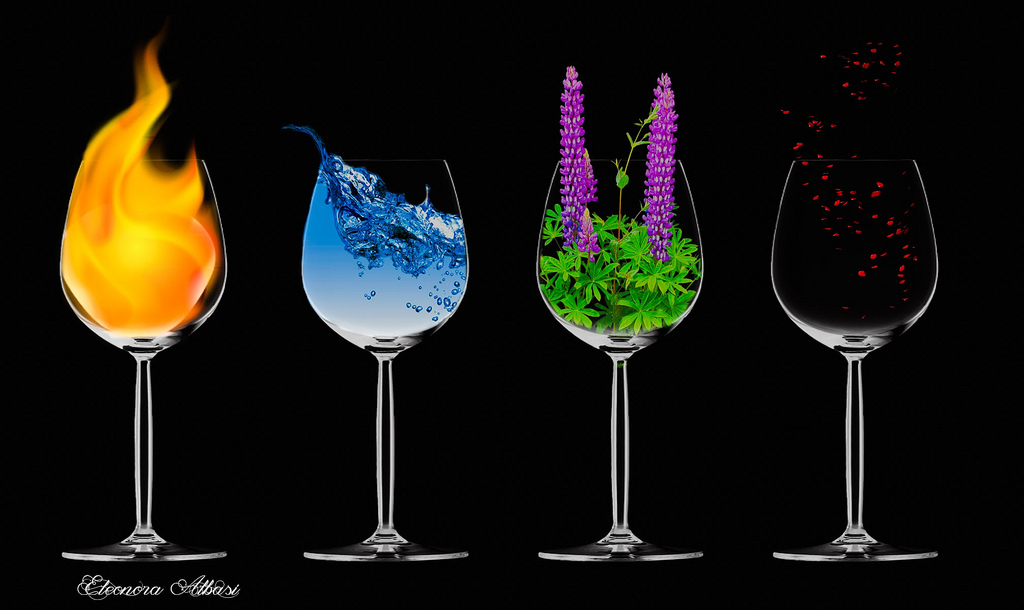
The Ariza'l lists the four elements of creation as:
fire
אש
air
רוח
water
מים
earth
אדמה
The kabbalists explain that when man becomes corrupt, the elements of the earth follow suit. This is Hashem's way of showing man that he must change his ways. The first Hebrew initials of the four elements are aleph, resh, mem and aleph - guess what they spell - "Irma". Who else is speaking if not Hashem? Will the so-called intellectuals still say "random" and "nature"? The Gemara says there is no pity for the spiritually ignorant.
See full post at Lazer Beams
Saturday, September 9, 2017
Thoughts and Prayers
Our thoughts and prayers are with the people of Florida, the Caribbean and surrounding areas, as well as Mexico, where thousands are now homeless after the quake and the hurricanes, and millions are fleeing their homes ahead of Hurricane Irma.
Some links below to how the Jews in some of these areas are coping.
50 Rabbis in Houston counsel cheer and support hurricane victims
Florida, short on Fuel and Food, Anxiously Awaits Irma
Jews in Southeastern U.S. Brace for Irma by 'Storm-proofing' Torah Scrolls
Atlanta Jewish community hosting thousands of Hurricane Irma Evacuees
Fleeing Irma, Jews Find Refuge in Atlanta Synagogues
These holy scrolls survived the Holocaust. Now, Hurricane Irma is coming
Puerto Rico's Small Jewish Community Prepares for Monster Hurricane
After the flood: A tale of two synagogues in Hurricane Harvey’s wake
Damage at Houston synagogue, homes leave 'entire community devastated'
Friday, September 8, 2017
Massive Quake Hits Mexico
A magnitude 8 earthquake off the coast of Mexico has sparked tsunami fears for much of Central America.
The shockwaves were felt in Mexico City, with buildings having lost power and people running into the darkened streets in their nighwear shortly before midnight local time.
Early reports suggest the city was shaken for as long as four minutes.
The major earthquake was recorded off the coast of Chiapas, southern Mexico, at a depth of 33km about 3pm AEST.
Tsunami alerts have been issued for the west coast of Mexico, Guatemala, El Salvador, Costa Rica, Nicaragua, Panama, Honduras and Ecuador.
Source: News
Torah Codes for Irma
Rabbi Glazerson is sometimes difficult to understand, but here he is showing the following words encoded in the Torah, clearly showing the reason why we have the hurricanes, as well as the remedy.
- The hurricane
- Irma
- Yam Karriba [Caribbean Sea]
- Elul
- 5777
- Teshuva
- You are doing evil in the eyes of G-d and making Him angry
- When you have troubles and all these things will befall you then it will be the End of Days - return to your G-d.
- Keep the commandments which I command you today....
- .....Geula.
- ben Yishai [son of Jesse]
Thursday, September 7, 2017
Hurricane Irma Prophecy in the Torah
Rabbi Yaron Reuven
Note for non-Jews: when Rabbi Reuven speaks about "Jews'' it is understood by me to also include righteous non-Jews, Noahides et al., just bear that in mind if you watch this.

The Gate of Tears

by Rabbi David Pinto Shlita
It is written, “Because you did not serve Hashem your G-d amid joy and goodness of heart” [Ki Tavo 28:47].
Rabbi Yossi said, “It is written: ‘Serve Hashem with joy, come before Him with joyous song’ [Tehillim 100:2], for in His service there is no room for sadness. It may be asked: What if a man is deep in sorrow and tribulation, and has no heart to rejoice, and yet his trouble forces him to seek compassion from the Heavenly King? Should he refrain from praying on account of his sorrow? What can he do? He cannot help being heavy-hearted!
The answer is, ‘All gates have been closed since the destruction of the Temple, but the gate of tears has not been closed’ – and tears are an expression of sadness and sorrow. The celestial beings appointed over the gate of tears break down all the iron locks and bars, and let these tears pass through. The prayers of the afflicted penetrate and reach the holy King…. Thus the prayers of the afflicted person do not return to him empty, and the Holy One takes pity on him. Blessed is the man who in his prayers sheds tears before the Holy One.”
– Zohar II:165ab
Wednesday, September 6, 2017
Purification requires Agitation and Confusion
I feel that the world is at a peak right now, in these two weeks before Rosh Hashanah. It reminds me of these words by Rebbe Nachman below.... the world is on the cusp of Moshiach iy''H.... we are being agitated and purified.... and all the scum is rising to the top, ready to be skimmed off to make way for the pure.

from the writings of Rebbe Nachman of Breslov, translated by Rabbi Aryeh Kaplan
When one begins to attach to a great tzadik and truly serve G-d, he is often filled with great confusion and evil thoughts.
The evil was always there, but only now it is surfacing.
A pot of water may seem perfectly clear. But when it is placed on a fire and begins to boil, all its impurities are brought to the surface. One must stand by and constantly remove these impurities.
The original purity is merely an illusion. With a little heat the impurity surfaces. But when these impurities are removed, the water is truly pure and clear.
The same is true of a person. Before he begins serving G-d, good and evil are completely mixed together within him. The impurities are so closely united with the good that they cannot be recognized.
But then this person comes close to a true Tzadik and begins to burn with great feeling toward G-d. He is touched with the heat of purification, and all the evil and impurities come to the surface. Here again one must stand by and constantly remove the dirt and impurities as they appear. In the end the person is truly pure and clear.
Purification requires this period of agitation and confusion.
In the beginning a person is totally immersed in the material. He then begins to come close to G-d.
It would seem possible to remove this dirt and impurity at once. But his mind is completely intermingled with this mire. Were it to be removed immediately, his mind would be drawn out with it.
Therefore, one must be purified little by little, in gradual stages.
Tuesday, September 5, 2017
Rosh HaShanah is Not What You Think
Rabbi Mendel Kessin: new shiur
A very interesting lecture about tikkunim - listen to this and you will have a good understanding of how it all works.
Monday, September 4, 2017
Friday, September 1, 2017
Better to Give
Jews customarily increase their giving of tzedakah and performance of good deeds and mitzvot... from Rosh HaShanah through Yom Kippur, more so than during the rest of the year...
and in this vein I am publishing this short post from Baruch Landa on behalf of Sulam Israel - please visit the site and consider a small [or large] donation for their worthwhile endeavours in helping children with disabilities in Israel.
Charity for the Disabled on the Rise
One of the sectors experiencing a ‘growth spurt’ in donations is ‘Disabled Charities’ – people,
and children specifically, with disabilities such as organizations like
Sulam Israel, who provide various child development programs to disabled children. This
includes children with Autism and Down Syndrome, both of which have been on the rise on
an annual basis. Organizations like these serve hundreds of students daily, with hundreds of
staff members and dozens of branches.
Before organizations like these existed, the integration rate (into society) for these disabled
children was in the single digits. However, by donating to disabled charities like Sulam, we
can increase the integration rate to over 30%!
Let’s help give children with disabilities the gift of a future.
Subscribe to:
Posts (Atom)


